Can sport help heal the invisible? [literature review]
One in three women. Across Europe, sexual and gender-based violence is not marginal, it is systemic, with deep and lasting consequences. Trauma, post-traumatic stress, disconnection from the body: for millions of women, recovery is a long and complex journey.
This is the question at the heart of the SAFE European project’s scientific literature review. Its starting point is both simple and challenging: what if sport, often identified as a space of risk, could also become a tool for recovery, if redesigned properly?
Drawing on recent international research, the review shows that physical activity, when delivered through trauma- and violence-informed approaches, can reduce post-traumatic stress symptoms, improve mental health, restore self-confidence, and help survivors reconnect with their bodies.
The findings also reveal a striking gap. Despite growing evidence of positive outcomes, programmes specifically designed for survivors of sexual violence remain extremely rare in the European Union. Research is limited. Structured models are scarce. Much remains to be built.
Among the practices explored, one stands out: fencing. Protective equipment, controlled distance, clear boundaries, and strong symbolism make it an unexpectedly powerful therapeutic tool. Early studies conducted in France highlight its potential to support emotional regulation and bodily reappropriation.
Beyond data and protocols, the SAFE literature review opens a new perspective: sport can be more than something to make safe, it can become part of the healing process.
👉 An essential read for anyone interested in rethinking sport as a lever for recovery, resilience, and empowerment.
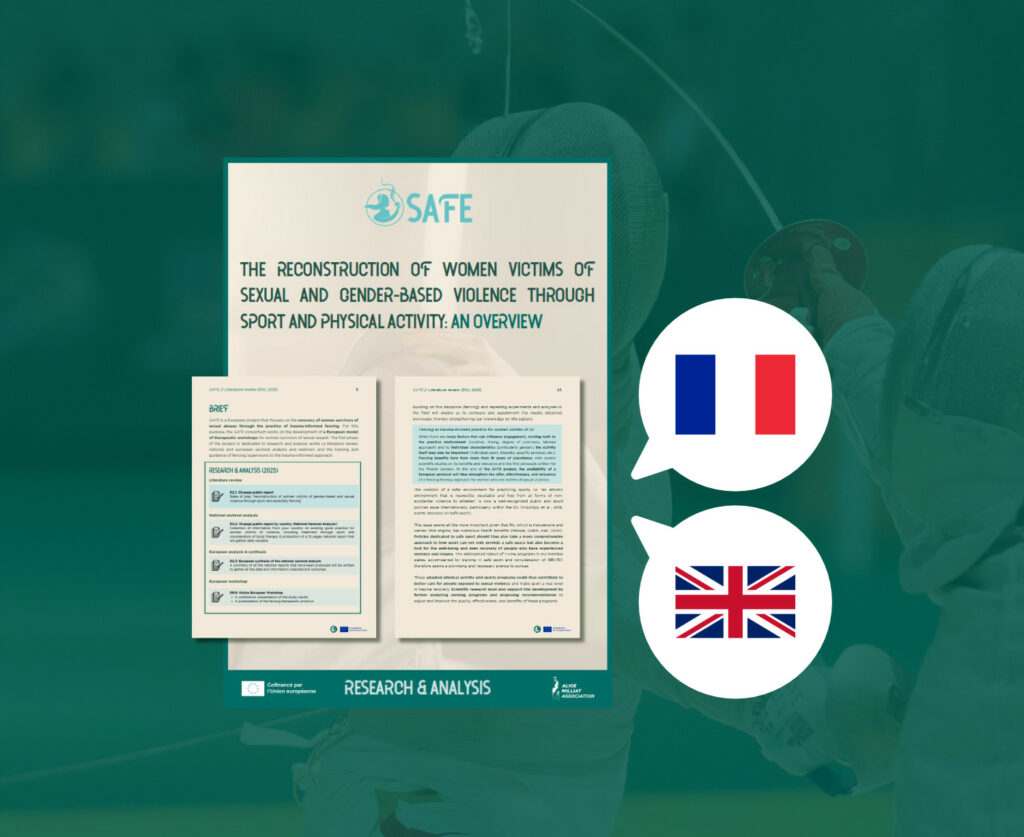
The literature review is available in two languages and available in the resources section:
English / French