How fencing can support survivors of sexual violence: key insights from the SAFE webinar
On Monday 26th of January, a webinar organised by the SAFE consortium brought together practitioners, researchers and sport organisations from across Europe to discuss how sport, and fencing in particular, can support women survivors of sexual and gender-based violence (GBV). Moderated by Inès Caetano (Sports Embassy)and Miguel Toscano (Vice-President of the Portuguese Fencing Federation), the session featured contributions from Valerio Di Tommaso (President of the European Culture and Sport Organization (ECOS) , Greg Quelain (Association Alice Milliat), Philippe Pautrat (ATPEscrime), andEva Jacomet (Sport and Citizenship).
Using sport to promote mental health
While the physical health benefits of sport are now widely recognised, its importance for mental health remains underused. As its president Valerio Di Tommaso points out, ECOS has developed a model for using physical activity and sport to help people with mental health problems. The SAFE project is also part of this approach: using sport, through the practice of fencing, to help women victims of sexual and gender-based violence recover from traumas.
Understanding the Need for Trauma-Informed Sport
Designing sport and physical activities that genuinely support mental health first requires ensuring safe and ethical practice environments, as emphasised by Inès Caetano. She highlighted the importance of intention and program design, reminding participants that not all sport environments automatically promote well-being.
Research findings presented by Greg Quelain illustrated both the scale and consequences of gender-based violence in Europe. As he noted, “one in three women in the European Union have experienced sexual threats and/or physical violence during their lifetime”. Trauma has a direct impact on access to sport, as people exposed to violence are less likely to engage in regular physical activity. The more severe trauma symptoms are, the lower participation levels tend to be.
He also shared survivor testimonies, including that of former basketball player Paoline Ekambi, who experienced violence during childhood. She described the decisive role sport played in her recovery: “It gave me a structure, a family when I needed it. It taught me how to live again and gave me the foundations of an education.”
Supporting survivors therefore requires adapting sport environments and training methods to their specific needs, taking trauma and its effects into account. Trauma-informed physical activity is structured around four core principles:
- Understanding trauma, violence and their impacts
- Creating emotionally and physically safe environments
- Promoting choice, connection and collaboration
- Building on strengths and capacities
This approach also highlights the importance of training coaches on trauma, including awareness of trauma responses, depression and the effects of medication, in order to avoid unintentionally putting participants at risk.
Fencing as a Therapeutic Tool: A Concrete Model
A key moment of the webinar was the presentation of the therapeutic fencing model developed by ATPE (Active Ton Potentiel par l’Escrime) in France and now being adapted within the SAFE project. Used since 2011, this model relies on fencing as a structured tool for psychological reconstruction.
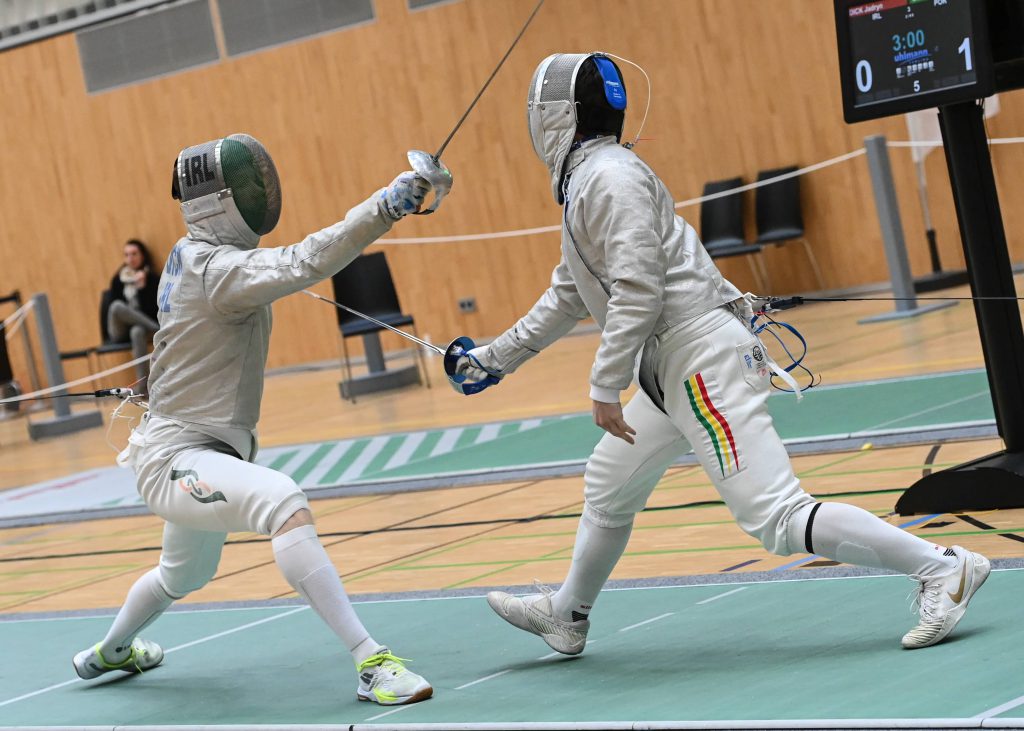
Philippe Pautrat, fencing master at ATPE, explained how fencing helps survivors regain control, particularly through the management of distance, a central element of the discipline. Learning to control physical space allows participants to rebuild emotional boundaries and trust in their own reactions.
The fencing equipment also plays a symbolic role. For example, the mask provides anonymity and a sense of protection, enabling therapeutic expression in a controlled environment.
Sessions are led by a multidisciplinary team combining a fencing master, a psychologist and a physiologist. The objective is not athletic performance, but the restoration of self-esteem, grounding and body awareness. Close cooperation between sport organisations, health professionals and social workers is essential to ensure safe practice conditions.
European Perspectives and Policy Challenges
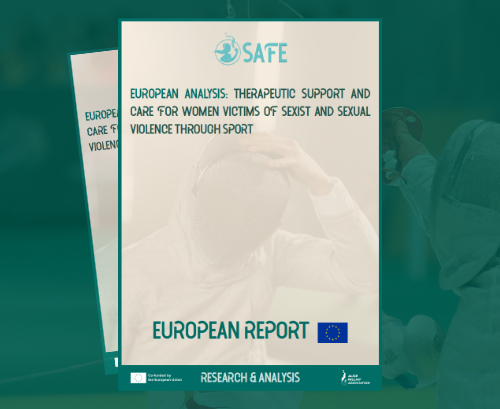
Presenting the European analysis conducted within the SAFE project, Eva Jacomet highlighted the lack of institutional recognition of sport as a tool for post-trauma recovery. While many EU policies address gender-based violence in sport, she explained that: “They often overlook the therapeutic and empowering role that sport can play in post-trauma recovery.”
She stressed the urgent need for better recognition of the decisive role of sport in mental health, including its integration into the EU Mental Health Strategy, which is currently not the case. Stronger institutional recognition should also be accompanied by reinforced financial support and dedicated funding.
Eva Jacomet further pointed out that definitions of a “safe sport environment” vary between partner countries, as does the level of collaboration between sport and health sectors. These disparities highlight the need for a shared European trauma-informed framework, one of SAFE’s main ambitions, to ensure consistency, safety and effectiveness across countries.
SAFE’s Contribution at European Level
With partners in Portugal, Belgium, Luxembourg and France, SAFE is working to adapt the therapeutic fencing model to diverse national contexts. As Inès Caetano reminded attendees, the project’s strength lies in combining research, field expertise and ethical reflection becausegoal is to create conditions where sport can truly support survivors, safely and responsibly.
Federations also have a role to play. Miguel Toscano, Vice-President of the Portuguese Fencing Federation, noted that sport must remain focused on people, not on performance.Through training and intersectoral cooperation, SAFE aims to build safer and more inclusive sport ecosystems across Europe.
The webinar demonstrated that fencing, when embedded within trauma-informed practice, can support survivors by combining movement, emotional regulation and symbolic expression. Through evidence-based methods and European collaboration, SAFE is strengthening the foundations for safer sport environments and new recovery pathways for women affected by sexual and GBV.
The full webinar is available on YouTube:
https://www.youtube.com/watch?v=b_gQkQh7s2Y